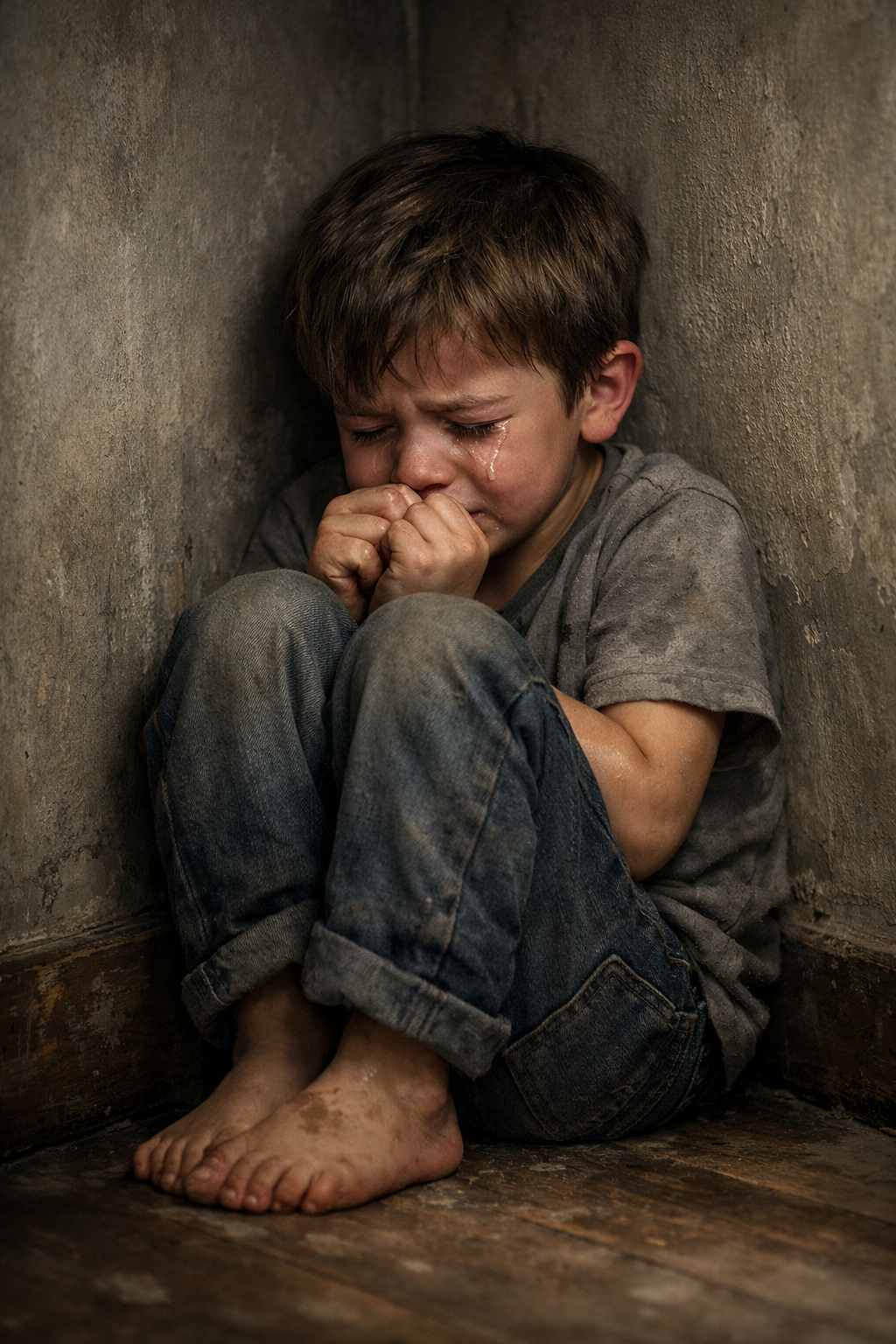
I grew up in foster care. Not the glossy brochure version—the real one. The one with the beatings, the screaming, the nights I cried into a pillow so no one would hear, the days I learned to make myself small because small things get hit less. I lived in homes where adults were supposed to protect me but instead taught me to flinch at footsteps and brace for impact. I learned early that the world didn’t see me as a child. I was a case file, a problem, a placement, a disruption, a statistic waiting to happen. But here’s the truth I need the world to hear:
Trauma isn’t a crime. And foster kids don’t belong in detention. Yet far too many of us end up there – not because we’re dangerous, but because we’re hurting. Not because we’re criminals, but because we’ve been criminalized for surviving what was done to us. This is my story, but it’s also the story of thousands of kids who never get to tell theirs.
The system teaches you to survive, not to heal. When you grow up in foster care, you learn quickly that adults can be unpredictable. Some are kind. Some are cruel. Some are indifferent, which can hurt just as much. I lived in homes where I was beaten for speaking, beaten for staying silent, beaten for existing in the wrong mood. I learned to read the air like weather—was today a storm or a calm? Kids like me don’t act out because we’re bad. We act out because we’re scared. Because we’re confused. Because we’re trying to protect ourselves in the only ways we know how.
But the system doesn’t see that. The system sees “defiance.” The system sees “aggression.” The system sees “noncompliance.” And instead of asking why, it punishes. Instead of therapy, we get restraints. Instead of compassion, we get police. Instead of safety, we get locked doors. I remember being told more than once that if I didn’t “behave,” I’d be sent somewhere “for kids like me.” As if I was a threat. As if I was dangerous. As if the bruises on my body were my fault.
When foster homes fail, the kids get blamed. Here’s something people don’t want to admit: A lot of foster homes are not safe. Some are loving, yes. Some are lifesaving. But many are not. And when a foster home is abusive, neglectful, or chaotic, the child is the one who gets labeled “difficult.” If a kid runs away from a home where they’re being beaten, they’re called a runaway. If a kid fights back against an abusive foster parent, they’re called violent. If a kid breaks down emotionally, they’re called unstable. And once those labels stick, the system starts treating the child like a problem to be contained instead of a person to be helped.
I’ve seen kids arrested for breaking a lamp during a panic attack. I’ve seen kids handcuffed for refusing to go to school because they were being bullied. I’ve seen kids thrown into detention for “property damage” after they punched a wall in a group home. These aren’t crimes. These are symptoms. Symptoms of trauma. Symptoms of fear. Symptoms of a system that fails to understand the very children it claims to protect.
There’s a phrase people use: the foster care-to-prison pipeline. It sounds dramatic until you’ve lived it. When you grow up in foster care, you’re more likely to be suspended from school, more likely to be arrested, more likely to be incarcerated. Not because you’re more dangerous, but because you’re usually more watched, more judged, more misunderstood.
A kid in a stable home throws a tantrum and they get comforted, but if a kid in foster care throws a tantrum they get written up, or moved, or placed in a group environment with locks. A kid in a stable home breaks something and they get grounded, but a kid in foster care breaks something and they get charged. The system treats foster kids like ticking time bombs instead of wounded children.
And once you’ve been in detention, even once, the world starts treating you differently. Teachers look at you differently. Caseworkers talk to you differently. Police approach you differently. You start to believe the lie the system has been whispering all along: that you’re trouble. That you’re broken. That you’re destined for a cell. But we weren’t. We were kids who needed help and got punishment instead.
Trauma responses are not criminal acts. Let me say this plainly: A traumatized child reacting to trauma is not a criminal. When a kid who’s been beaten their whole life swings a fist, that’s not violence, it’s survival. When a kid who’s been abandoned runs away, that’s not delinquency, it’s fear. When a kid who’s been silenced screams, that’s not defiance, it’s pain. But the system doesn’t know how to handle trauma. It knows how to handle compliance. And when a child can’t comply because they’re drowning in memories, triggers, and fear, the system escalates instead of supports.
I remember being punished for “talking back” when I was really trying to explain why I was scared. I remember being restrained for “acting out” when I was really having a panic attack. I remember being told I was “too much” when really I was just a kid who needed someone to see me.
Trauma isn’t a choice. Trauma isn’t misbehavior. Trauma isn’t a crime.
There are thousands upon thousands of kids in foster care today, and almost all of them have some form of trauma. Who wouldn’t? If the world wants fewer foster kids in detention, the solution isn’t more discipline. It’s more humanity. We need trauma-informed care, not adults who yell, threaten, or punish, but adults who understand what trauma does to a developing brain. We need mental health support, not a once-a-month check-in with an overworked therapist, but real, consistent, compassionate treatment. We need stable homes, not placements that shuffle us around like luggage, but families who commit to staying even when things get hard.
We need to be believed. When we say we’re scared. When we say we’re hurting. When we say something is wrong. We need adults who see the child behind the behavior. Because there is always a child there. Always.
The system failed us, but we don’t have to fail the next generation. I survived foster care. Not because the system protected me, but because I was stubborn enough to keep going. I lived through beatings, through trauma, through homes that broke me down instead of building me up. And I came out the other side determined to speak for the kids who are still trapped in it.
Kids who are hurting don’t need handcuffs. Kids who are traumatized don’t need detention. Kids who have been abused don’t need to be punished for the scars they carry. They need love. They need safety. They need understanding. They need a system that treats them like human beings, not case numbers. And they need a world willing to say, loudly and unapologetically:
Trauma isn’t a crime. Foster kids don’t belong in detention. They belong in a loving home that can help them heal. They need love. And they need hope.